Things to Do in Jeju in August
August weather, activities, events & insider tips
Peak Season · Premium Pricing
August Weather in Jeju
Long-run averages for August
86°F (30°C)
High Temp
76°F (24°C)
Low Temp
10.7 inches (272 mm)
Rainfall
84%
Humidity
9
Sunny-Day UV
⚠ Typhoon season peaks in August and September, and Jeju sits directly in the path of storms tracking north through the East China Sea. When a typhoon makes a direct or near-miss approach, expect 24-48 hours of flight cancellations at Jeju International Airport, all ferry services to Udo Island and the mainland suspended, and coastal road closures island-wide that can strand you in your accommodation.
⚠ Intense afternoon convective storms can dump heavy rainfall in short bursts, turning Hallasan trail stream crossings into flash-flood channels and making low-lying coastal roads in the Seogwipo area temporarily impassable. Check Korea Meteorological Administration forecasts each morning. Keep a charged phone with the emergency alert system enabled.
⚠ Moon jellyfish and occasionally more potent species appear in Jeju's coastal waters through July and August. Designated swimming beaches with lifeguards maintain jellyfish nets during the season. But unguarded coves and snorkelling spots along the Olle trails do not, so ask locals about conditions before entering the water at unfamiliar spots.
Is August Right for You?
Weigh the advantages and considerations before booking
Advantages
- + Ocean temperatures peak near 26°C (79°F). Jeju's beaches are finally swimmable without a wetsuit for the first time since June. Hyeopjae's turquoise shallows and Hamdeok's crescent of coral-white sand stay warm enough for hours. Even Jungmun's rougher surf feels mild against your skin.
- + Hallaasan and the island's interior hit their deepest green. Hydrangea hedgerows still bloom purple and blue along coastal roads. The subtropical forest canopy drips after afternoon storms. Jeju in August looks its most dramatic photographically. The contrast of black basalt against saturated foliage is unmatched.
- + Summer seafood season brings peak catches from the haenyeo divers. Fresh abalone, spiny turban shells, and sea urchin appear at morning coastal markets. The brine-and-iodine immediacy is absent in other months. Jeju-grown mangoes and the last hallabong citrus hybrids fill every roadside stand.
- + Daylight stretches past 7 PM. You get long golden evenings to walk the Jeju Olle coastal trails. Sit on the volcanic rock at Woljeongri Beach. Watch the light turn the surf from steel-blue to amber before it finally fades.
Considerations
- − August is Jeju's wettest month at 272 mm (10.7 inches). Storms arrive fast. An afternoon downpour can dump 40 mm (1.6 inches) in under an hour. Hallasan trail streams become real torrents. Summit routes close without warning. Build a fallback into every outdoor plan.
- − Korean school summer holidays run through August's end. Jeju absorbs the full force of domestic tourism. Seongsan Ilchulbong's parking lots pack by 9 AM. Queues snake out of Manjanggul Cave. Accommodation books out weeks ahead. Rates sit well above the annual average.
- − Humidity locks at 84%. It wraps around you the moment you step outside. Midday walking feels like breathing through damp cloth. Sweat refuses to evaporate. Leather goods left without a dehumidifier sprout mold within days.
Best Activities in August
Top things to do during your visit
August drops Jeju into the thick of its subtropical summer, when the island's volcanic landscape sweats under daily highs around 30°C and nighttime lows that barely dip below 24°C. The air clings. Rainfall reaches its annual peak this month, averaging roughly 272 millimeters, arriving not as all-day drizzle but in theatrical downpours that can soak a hiking trail in twenty minutes and leave the sky scrubbed clean an hour later. Between squalls, steam rises off black basalt, tangerine groves exhale citrus into the wet heat, and the sea around Jeju shifts from grey-green to an almost tropical turquoise wherever the sun breaks through. Visitors who time their outings around the rain, rather than fighting it, discover an island that feels more alive in its wettest month than during the mild, camera-ready days of spring. Locals on Jeju treat August as ocean season. Hamdeok and Hyeopjae beaches fill early with families hauling coolers of gimbap and bottles of makgeolli, and the shallow, bathwater-warm tide pools along the southern coast draw children who shriek at sea cucumbers underfoot. Seafood restaurants near Seogwipo stack their tanks with spiny turban shells and abalone pulled that morning, the brine smell drifting across the harbor road. Inland, the mid-altitude forests on Hallasan's flanks are dense with ferns and hydrangeas at the tail end of their bloom, the undergrowth so green it borders on neon after weeks of heavy rain. Evening brings relief: the temperature drops just enough to make a walk along the Olle trails bearable, cicadas sawing in the camphors, the volcanic soil still warm underfoot. Jeju in August is not polished or temperate. It is loud, soaked, and sensory, and it rewards anyone willing to sweat through it. When rain closes in, which it will, the island's lava tubes, museums, and indoor markets keep a day from stalling. The Dongmun traditional market in Jeju City stays open late, its stalls fragrant with grilled black pork and the sharp, fermented kick of freshly pressed hallabong juice. For travelers asking what to do on Jeju when it rains, the answer is rarely stay indoors for long. Showers pass. Roads dry. The next waterfall is fuller than it was yesterday.

Small Group Tour in South Jeju Healing Island w/Mt. Halla & Falls
guided_experienceThe Small Group Tour in South Jeju Healing Island w/Mt. Halla and Falls threads together the island's most dramatic vertical scenery in a single guided day, climbing from the mossy, fern-draped gorges below Cheonjiyeon Falls, where mist from the cascade settles cold on bare arms, up toward the subalpine meadows flanking Hallasan's crater rim. The group stays small enough that the guide can detour to viewpoints most bus tours blow past, and lunch breaks lean into southern Jeju's coastal cooking rather than tourist-center buffets. On clear stretches between August's afternoon downpours, the panorama from the upper trails reaches all the way to the Marado horizon, the southernmost point in South Korea, with nothing between you and the ocean but cooling volcanic air.
Jeju's highest peak and its most powerful waterfall compressed into one guided route, with a group small enough to hear the guide over the falls.
Insider tip: Start early and wear shoes with aggressive tread. August rain turns Hallasan's stone steps slick by midday, and the morning window before the first squall is often the clearest you will get.
This month: August rainfall is the year's heaviest on Hallasan, which can trigger temporary trail closures on the summit routes. The waterfalls, in return, run at maximum volume, their roar audible well before you see them.

Small Group Tour in East Jeju Healing Island w/Woman Divers Show
entertainmentThe Small Group Tour in East Jeju Healing Island w/Woman Divers Show moves along the eastern coastline where the volcanic shelf drops sharply into deep water, and the haenyeo, Jeju's free-diving women, work the rocky shallows for sea urchin, abalone, and octopus without tanks or regulators. The live demonstration is not staged theater. These are working divers, many in their sixties and seventies, surfacing with a sharp whistle called sumbisori that cuts across the wind. Afterward, the tour winds through Jeju's eastern lava formations, where fingers of black rock jut into surf that smells of iodine and kelp, and the spray tastes faintly of salt even on the road above.
The haenyeo tradition is on the UNESCO Intangible Cultural Heritage list, and watching these women dive in open water, without modern equipment, is one of those encounters that no museum exhibit can replicate.
Insider tip: Sit as close to the waterline as the guides allow during the diving show. The sumbisori breathing technique is quieter than you expect, and the splash of a surfacing diver carrying a full net is worth seeing up close rather than through a telephoto lens.

Private Tour in Jeju Island All Inclusive with Lunch
private_tourThe Private Tour in Jeju Island All Inclusive with Lunch puts the entire day's logistics into someone else's hands, which on an island where public transit runs thin and rental-car navigation defaults to Korean-language GPS, matters more than it sounds. The route flexes around weather and your interests, from the columnar basalt cliffs at Jusangjeolli, where hexagonal pillars of cooled lava meet crashing surf, to quieter tea plantations inland where the humid August air intensifies the grassy, almost vegetal scent of freshly rolled green tea. Lunch is included and locally sourced, often built around Jeju's signature black pork, grilled over charcoal until the fat renders crisp and the smoke hangs low over the table.
A private vehicle and guide who adjusts the route to August's unpredictable weather means you spend the day seeing Jeju rather than waiting out a squall in a parking lot.
Insider tip: Ask the guide to include a stop at a haenyeo seafood shack rather than a restaurant. The raw abalone, sliced minutes after it comes out of the water and served with a sesame-oil dip, is incomparably fresher than anything plated at a sit-down spot.

Jeju island Southern Unesco Mt.halla ONE day Bus Tour
culturalThe Jeju Island Southern UNESCO Mt. Halla One Day Bus Tour covers the southern volcanic corridor at a pace that works for travelers who want structure without the cost of a private car. The bus route hits the Hallasan National Park access points and several of the southern coast's UNESCO Global Geopark sites, including the Seongsan Ilchulbong tuff cone, where the crater's grassy bowl is so vivid green in August it looks artificially saturated. At the coast, waves pound into sea caves that echo with a deep, resonant boom you feel in your sternum before your ears fully register it. The tour keeps moving efficiently, which in August's heat is a kindness: air-conditioned transfers between outdoor stops prevent the kind of slow, overheated slog that drains a walking itinerary by early afternoon.
The most cost-effective way to reach Jeju's southern UNESCO sites without renting a car, with enough stops to fill a day without feeling rushed.
Insider tip: Bring a lightweight, packable rain jacket, not an umbrella. The wind at exposed coastal stops like Jusangjeolli will invert an umbrella in seconds, and August's rain arrives sideways more often than straight down.

Jeju island Jumbo taxi Private Tour with Mr.Hong west of jeju
transportThe Jeju Island Jumbo Taxi Private Tour with Mr. Hong, covering the west of Jeju, trades the anonymity of a bus tour for a driver-guide who knows the western coast's quieter stretches, the kind of places where a single stone-walled village sits between canola fields and the ocean with no tour bus in sight. The jumbo taxi format seats a small group comfortably with room for bags, and Mr. Hong's local knowledge steers the route toward the Hallim coast's sea caves, the Osulloc tea fields where rows of clipped bushes exhale a humid, chlorophyll-heavy scent in the August heat, and the orange-tinged sunset cliffs near Chagwido. Western Jeju is less visited than the eastern circuit, which means shorter lines, emptier beaches, and the particular pleasure of hearing nothing but wind and surf at a coastal overlook where an east-side equivalent would be shoulder to shoulder.
Western Jeju holds the island's most undervisited coastline, and a local driver who knows the access roads turns a half-day into a string of private-feeling stops.
Insider tip: Request a late-afternoon departure if you can. The west coast faces the sunset, and on evenings when August clouds break just above the horizon, the light over Chagwido turns the basalt cliffs a deep copper that photographs far better than the flat midday glare.

Full Day Essential Jeju Island Private tour for West Course
day_tripThe Full Day Essential Jeju Island Private Tour for West Course follows the western arc from Jeju City down through Hallim and the coastal lowlands, with a private vehicle and guide who can linger at the spots that interest you and skip the ones that do not. The route typically includes the Hyeopjae Beach stretch, where the sand is so white against Jeju's usual black volcanic palette that the contrast is almost disorienting, and the shallow water glows an improbable shade of aquamarine even under overcast August skies. Further south, the Spirited Garden's bonsai collection sits in a walled compound where the humidity keeps the moss on century-old junipers so thick you can smell the damp earth from the walkway. The western interior also holds some of Jeju's best horse-riding country, open grasslands where Jeju ponies graze in fields still slick from the morning rain.
A private guide on the western route means you stop at Hyeopjae when the light is right, rather than arriving on a bus schedule that may land you there at the worst possible hour.
Insider tip: If Hyeopjae is too crowded, which it can be in August, ask the guide to continue five minutes south to Geumneung Beach. It shares the same turquoise water and pale sand but draws a fraction of the foot traffic, and the swimming is equally good.
Where to Stay in Jeju in August
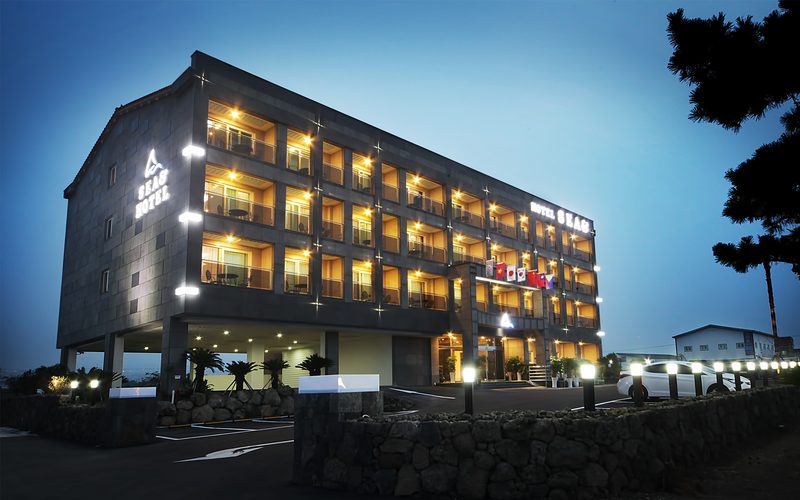
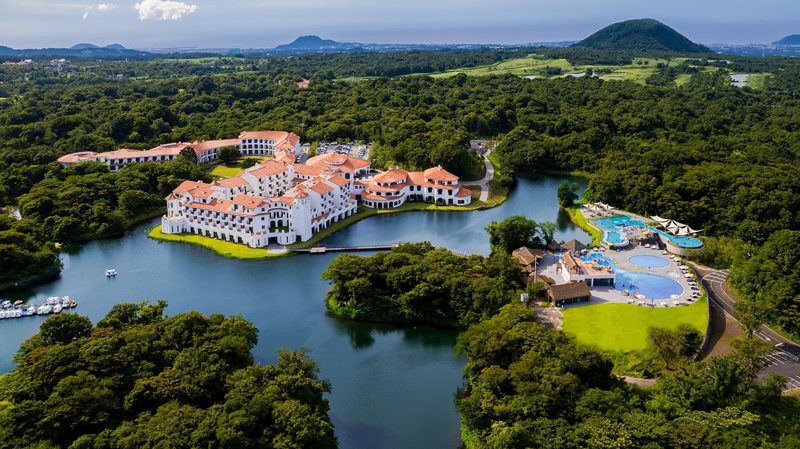
Hand-picked hotels across price tiers for August travellers.
Public Holidays in August
Dates that affect opening hours, transport and crowds
광복절
Known in English as Liberation Day. Observed nationwide as a public holiday.
광복절
Known in English as Liberation Day. Observed nationwide as a public holiday.
Packing Checklist
Bookmark this page — your progress is saved between visits
Need the full list with shopping links?
Climate-specific gear, brand recommendations, and what to leave at home.
View Jeju Packing List →Essential Tips
Insider knowledge and common pitfalls to avoid
Insider Knowledge
Korean school summer holidays flood Jeju with domestic families through the end of August, and the island's two-lane coastal roads were not designed for the volume. Locals avoid driving between 10 AM and 6 PM on weekends entirely, and you should too if possible. Rent a car. You'll likely need one since Jeju's bus network is adequate but slow. Plan your driving for early mornings and evenings, spending the midday heat at indoor spots or the beach nearest your accommodation rather than crisscrossing the island in traffic that turns a 40-minute coastal drive into 90 minutes of stop-and-go frustration.
The haenyeo, Jeju's famous women free-divers, most now in their 60s and 70s, work the early morning tides on the rocky coastline near Seongsan and along the north shore villages. If you want to watch them surface with nets of abalone and sea urchin, pulling themselves onto the rocks with a practised ease that makes their age invisible, be at the shore by 7 AM. By 9 they've finished for the morning, and the 'haenyeo shows' at tourist sites are choreographed re-enactments. The real thing is quieter, less narrated, and happening at a dozen unremarked spots along the coast every morning the sea conditions allow it.
Jeju's rainy-day fallback is better than most islands can manage. Beyond the lava tubes, the island has accumulated a collection of museums and indoor attractions. The Jeju Stone Park, the Osulloc Tea Museum set amid green tea fields that smell of cut grass and roasted leaves even in the rain, and the Spirited Garden bonsai collection near Hallim absorb a wet afternoon without feeling wasted. The local move during typhoon weather or heavy rain is to settle into a black pork barbecue restaurant, order slowly, add rounds of pajeon (scallion pancake, crisp on the outside, steaming inside, eaten with makgeolli rice wine), and treat the meal as the afternoon's main event rather than a pit stop between sights.
Accommodation on Jeju in August follows a steep weekend-to-weekday price curve. Arrive Monday. Leave Thursday or Friday. You'll find rooms that would require booking a month ahead for a weekend stay available with days to spare at noticeably lower rates. The Seogwipo side tends to book out faster than Jeju City because of beach proximity, so if you're flexible on location, staying in Jeju City's Tapdong waterfront area and driving to southern beaches gives you more options and often a better deal. For evening walks, the Yongduam Rock area on Jeju City's coast is uncrowded after dark, with the sound of waves on basalt and the lights of fishing boats offshore. It's one of the few quiet spots on the island in August.
Avoid These Mistakes
Planning a full outdoor itinerary without rain contingencies and then spending half the trip miserable. August on Jeju will rain on you. The question is when and how hard, not whether it happens. Travellers who schedule every day around outdoor attractions end up frustrated and soaked. Build at least two indoor half-days into any week-long trip: the lava tubes, Jeju's museums, or a long slow lunch at Dongmun Market are better experiences than standing in drizzle at Cheonjiyeon Waterfall trying to enjoy it on principle.
Underestimating Jeju's size and spending half the trip in a car between distant attractions. The island is 73 km (45 miles) across, which sounds manageable until you factor in August traffic on the coastal road, where a drive that takes 40 minutes in April stretches to 90 in peak summer. First-timers often try to squeeze Seongsan, Hallasan, and Jungmun into a single day and end up seeing all three through a windshield while the kids in the back seat melt. Pick a base. Commit to one side of the island per day. spend time at each place rather than collecting stamps.
Attempting the Hallasan summit hike without checking trail status the night before and building in schedule flexibility. The park service closes summit trails based on weather conditions, and in August those closures happen frequently and without much notice. Travellers who build their entire trip around summiting Hallasan on a specific fixed day get caught out when that morning's announcement says the Gwaneumsa route is closed above 1,500 m (4,921 ft). Keep the summit attempt as a floating option for the clearest morning of your trip, not a locked calendar slot, and have the Eorimok or Olle trail alternatives ready to go.
Ready to plan your trip to Jeju?
Now that you've got the research covered, here's where to go next.
Explore More Activities in Jeju
Didn't see anything interesting yet?
Browse Viator's full catalog of tours, day trips, food experiences, and private guides in Jeju.
See All Jeju Tours on Viator